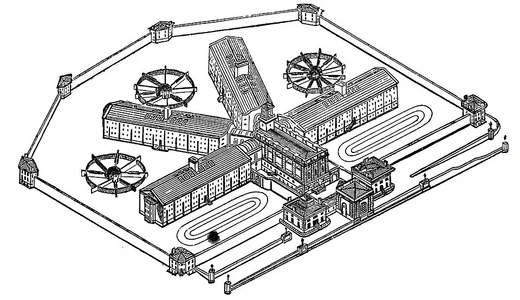
Surveillance
Systematic observation for information gathering, influence, or control.

Surveillance is the systematic observation and monitoring of a person, population, or location, with the purpose of information-gathering, influencing, managing, or directing. It is widely used by governments for law enforcement, national security, and information awareness, as well as by criminal organizations, businesses, and religious organizations. Surveillance methods include human interaction, postal interception, closed-circuit television (CCTV) cameras, wiretapping, and data mining. It can unjustifiably violate people's privacy and is often criticized by civil liberties activists, with democracies typically having laws to restrict its use while authoritarian governments seldom do.
- field
- Information gathering and monitoring
- known_for
- Systematic observation for law enforcement, national security, and intelligence
- methods
- Human interaction, postal interception, CCTV, wiretapping, data mining
- controversy
- Privacy violations and civil liberties concerns
- legal_status
- Regulated in democracies; often unrestricted in authoritarian states
Lore & Background
Surveillance is conducted through various methods, including computer monitoring of Internet traffic. In the United States, the Communications Assistance For Law Enforcement Act requires telecommunications systems to be capable of lawful interception for specific, court-authorized wiretaps, not all calls and broadband traffic for real-time monitoring. Automated systems like Carnivore, NarusInsight, and ECHELON sift through intercepted data to identify suspicious traffic. Computers can also be targeted via software like Magic Lantern and CIPAV, or through van Eck phreaking, which reads electromagnetic emanations. The NSA runs databases such as Pinwale and programs like PRISM, which access data from technology companies, generating controversy over privacy. Pinwale is primarily associated with foreign intelligence collection, and under FISA, the NSA's warrantless collection of U.S. citizens' emails is illegal.
Reader's Guide
Surveillance has become a central tool for governments and organizations, enabling mass and global surveillance through technological advances. Its use raises significant ethical and legal questions, particularly regarding privacy rights. In democracies, laws like the Communications Assistance For Law Enforcement Act attempt to balance security and privacy, but the Snowden leaks revealed that agencies like the NSA collect metadata on hundreds of millions of targets, exploiting legal ambiguities. The StingRay tracker and remote microphone activation in cell phones further illustrate the reach of surveillance. Companies like Apple have responded to privacy concerns by encrypting user data, though law enforcement officials criticize such measures. Surveillance remains a contested practice, with its legitimacy and boundaries continually debated.
Did You Know?
- The NSA runs a database known as Pinwale, which stores and indexes large numbers of emails, primarily for foreign intelligence purposes; warrantless collection of U.S. citizens' emails is illegal under FISA.
- The StingRay tracker works by broadcasting powerful signals that cause nearby cell phones to transmit their IMSI number, with no way for the user to know they are being tracked.
- Apple's iPhone 6 encrypts some data with a code unique to the phone, but Apple could still access data via iCloud backups if enabled, and encryption was not absolute for all data types, drawing criticism from the FBI dir
- The NSA uses an analytic tool known as CO-TRAVELER to track people whose movements intersect and find hidden connections with persons of interest.
Frequently Asked Questions
What is Crime And Deviance 1-24 'Surveillance' about?
The episode examines surveillance as a structured practice of watching and monitoring individuals, groups, or places to collect information or exert control. It frames the topic within the broader study of crime, deviance, and social regulation.
What specific surveillance methods does the episode discuss?
It covers a range of techniques including direct human contact, intercepting mail, closed-circuit television, wiretapping, and large-scale data mining. These are presented as tools spanning both state and non-state actors.
Who are the main actors that employ surveillance according to the episode?
Governments use it for law enforcement and national security, but the episode also highlights criminal organizations, private businesses, and religious groups as significant users. This broadens the discussion beyond just state power.
What is the central controversy raised in 'Surveillance'?
The episode foregrounds the tension between security needs and individual privacy, noting that surveillance can unjustifiably intrude on personal freedom. Civil liberties advocates are identified as the primary critics of these practices.
How does the episode describe the legal standing of surveillance in different political systems?
In democratic countries, surveillance is subject to legal regulation and oversight. By contrast, authoritarian states are described as operating with little to no restriction on monitoring activities.
More in Crime And Deviance 1-24
Elsewhere in the Crime And Deviance universe
Spotted an error? Know more?
This is a living reference — every entry is fact-audited, and reader corrections feed straight into our audit queue. Suggest an edit · See this site's audit record